
Portugal's Election to the United Nations Security Council and the principles it must uphold
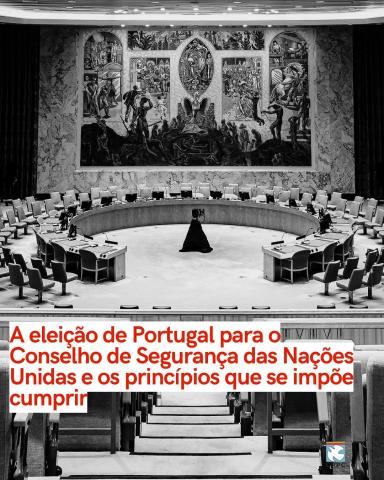
Portugal's election as a non-permanent member of the United Nations Security Council for the period 2027-2028 entails significant responsibilities, particularly in defending the principles of the UN Charter, international law, and compliance with the Constitution of the Portuguese Republic. This demands a profound change in the foreign policy pursued by this Government, following in the footsteps of previous ones.
It is unacceptable that the Portuguese Government, in the position it will assume, continues to base its foreign policy choices on submission to the interests and impositions of the United States of America, NATO, and the European Union – and their policy of confrontation, war, and aggression against countries and peoples.
It is unacceptable that a non-permanent member of the United Nations Security Council should be known for boasting about ceding national territory for aggression against another State – as happened with the cession of the Lajes Air Base to attack Iran (as acknowledged by US Secretary of State Marco Rubio).
It is intolerable that the government of a country elected to such an important United Nations body should have a seat on the Security Council, which harbored "benign intentions" in the aggression against a State through the kidnapping of its president by foreign military forces – as Minister Paulo Rangel did when Nicolás Maduro and MP Cília Flores were kidnapped on January 3rd of this year by US troops.
It is inconceivable that a seat on the United Nations Security Council could be used to consent – by action or omission – to attacks on peace and security such as the genocide in the Gaza Strip, the occupation of the West Bank, the blockade against Cuba, and the prolongation of the war in Eastern Europe.
Portugal's actions in the United Nations Security Council must be guided by the principles and objectives enshrined in Article 7 of the Constitution of the Portuguese Republic: national independence; respect for human and peoples' rights; equality among States; and the peaceful settlement of international disputes. Non-interference in the internal affairs of other States and cooperation with all other peoples for the emancipation and progress of humanity; the abolition of imperialism, colonialism and any other forms of aggression, domination and exploitation in relations between peoples; general, simultaneous and controlled disarmament; the dissolution of political-military blocs and the establishment of a system of collective security, with a view to creating an international order capable of ensuring peace and justice in relations between peoples.
This is what serves the peace and rights of the peoples of the world, including the Portuguese people. This is what this government, like any other, has a duty to fulfill. This is what would make Portugal's presence on the United Nations Security Council truly useful. This is why the Portuguese Council for Peace and Cooperation will continue to fight and mobilize many others so that these principles effectively guide Portuguese foreign policy.
The National Board of the CPPC
06/06/2026
--/
A eleição de Portugal para o Conselho de Segurança das Nações Unidas e os princípios que se impõe cumprir
A eleição de Portugal para membro não permanente do Conselho de Segurança das Nações Unidas no período 2027-2028 comporta grandes responsabilidades nomeadamente na defesa dos princípios da Carta da ONU, do direito internacional, do cumprimento da Constituição da República Portuguesa, o que reclama uma profunda alteração da política externa seguida por este Governo, na esteira aliás dos anteriores.
Não é admissível que o Governo português, na posição que passará a assumir, continue a pautar as suas opções de política externa pela submissão aos interesses e imposições dos Estados Unidos da América, da NATO e da União Europeia – e da sua política de confrontação, guerra e agressão contra países e povos.
Não é aceitável que um membro não-permanente do Conselho de Segurança das Nações Unidas seja conhecido por se orgulhar de ceder território nacional para a agressão a um outro Estado – como sucedeu com a cedência da Base das Lajes para atacar o Irão (como reconheceu o Secretário de Estado norte-americano Marco Rubio).
Não é tolerável que o governo de um país eleito para esse organismo tão importante das Nações Unidas tenha vislumbrado “intenções benignas” na agressão a um Estado no sequestro do seu presidente por forças militares estrangeiras tenha assento – como fez o ministro Paulo Rangel aquando do rapto de Nicolas Maduro e da deputada Cilia Flores, a 3 de Janeiro deste ano, por tropas dos EUA.
Não é concebível que um lugar no Conselho de Segurança das Nações Unidas possa ser utilizado para consentir – por ação ou omissão – atentados à paz e à segurança como o genocídio na Faixa de Gaza, a ocupação da Cisjordânia, o bloqueio contra Cuba, o prolongamento da guerra no Leste da Europa.
A ação de Portugal no Conselho de Segurança das Nações Unidas terá de ser norteada pelos princípios e objetivos inscritos no artigo 7.º da Constituição da República Portuguesa: a independência nacional, o respeito dos direitos do homem e dos povos; a igualdade entre os Estados; a solução pacífica dos conflitos internacionais; a não ingerência nos assuntos internos dos outros Estados e a cooperação com todos os outros povos para a emancipação e o progresso da humanidade; a abolição do imperialismo, do colonialismo e de quaisquer outras formas de agressão, domínio e exploração nas relações entre os povos; o desarmamento geral, simultâneo e controlado; a dissolução dos blocos político-militares e o estabelecimento de um sistema de segurança coletiva, com vista à criação de uma ordem internacional capaz de assegurar a paz e a justiça nas relações entre os povos.
É isto que serve a paz e os direitos dos povos do mundo, incluindo do povo português. É isto que este governo, como qualquer outro, tem o dever de cumprir. É isto que tornaria verdadeiramente útil a presença de Portugal no Conselho de Segurança das Nações Unidas. É por isto que o Conselho Português para a Paz e Cooperação se continuará a bater e a mobilizar muitos outros para que estes princípios norteiem efetivamente a política externa portuguesa.
A direção nacional do CPPC
06/06/2026